
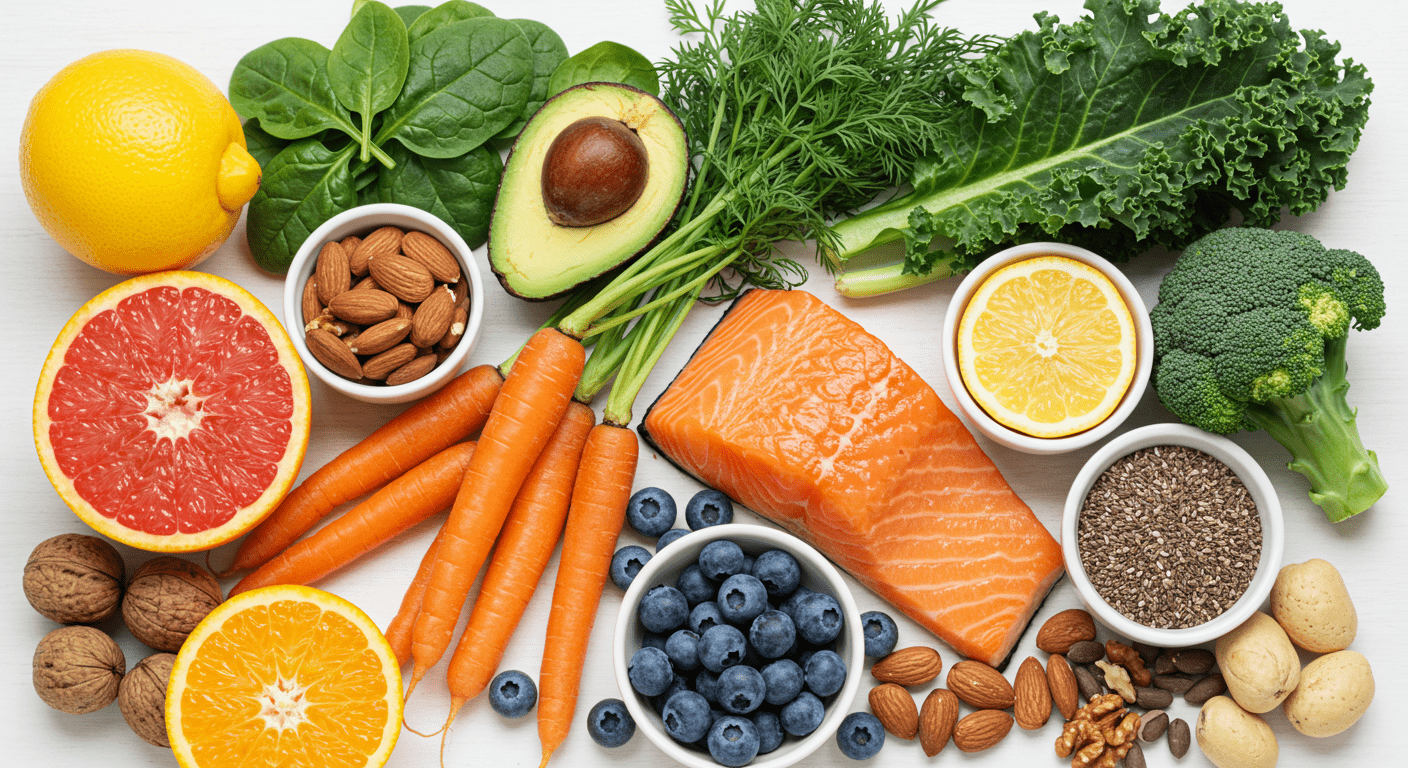
When it comes to maintaining sharp vision and protecting your eyes from age-related problems, the best foods for eye health might surprise you. While we often think about eye care in terms of sunglasses and screen breaks, what you eat plays a massive role in keeping your peepers in peak condition.
Your eyes are incredibly complex organs that work harder than you might realize. They process about 36,000 pieces of information every hour and are constantly exposed to light, oxygen, and environmental stressors that can damage delicate eye tissues over time. The good news? The right nutrition can act like a superhero cape for your vision.
In this guide, we’ll explore the most powerful nutrients for eye health, reveal which foods pack the biggest visual punch, and show you how to create an eye-friendly meal plan that tastes as good as it makes you see.
Why Nutrition Matters for Your Vision
Your eyes need specific nutrients to function properly and repair daily damage from light exposure, screen time, and aging. Without adequate nutrition, you’re more susceptible to conditions like macular degeneration, cataracts, and dry eyes.
Think of it this way: just as your car needs the right fuel to run smoothly, your eyes need the right nutrients to maintain clear, sharp vision throughout your life. The best foods for eye health provide these essential building blocks.
Top 10 Best Foods for Eye Health
1. Leafy Green Vegetables
Spinach, kale, and collard greens top the list of best foods for eye health thanks to their high concentrations of lutein and zeaxanthin. These carotenoids act like natural sunglasses, filtering harmful blue light and protecting your retina.
How to enjoy them:
- Add spinach to smoothies
- Make kale chips as a crunchy snack
- Sauté collard greens with garlic and olive oil
2. Carrots and Sweet Potatoes
Mom was right about carrots being good for your eyes! These orange vegetables are packed with beta-carotene, which your body converts to vitamin A—essential for night vision and preventing dry eyes.
Sweet potatoes provide even more beta-carotene than carrots, making them one of the absolute best foods for eye health.
3. Fatty Fish
Salmon, tuna, sardines, and mackerel deliver omega-3 fatty acids that support retinal health and help prevent dry eye syndrome. The DHA (docosahexaenoic acid) in these fish is particularly concentrated in your retina.
Weekly goal: Aim for 2-3 servings of fatty fish to maximize eye health benefits.
4. Eggs
Eggs are nutritional powerhouses containing lutein, zeaxanthin, vitamin A, and zinc—all crucial for eye health. The yolks contain the highest concentrations of these vision-protecting nutrients.
5. Citrus Fruits
Oranges, grapefruits, lemons, and limes provide vitamin C, which supports the health of blood vessels in your eyes and may reduce cataract risk. They’re definitely among the best foods for eye health when it comes to antioxidant protection.
6. Nuts and Seeds
Almonds, sunflower seeds, and walnuts provide vitamin E, which protects eye cells from damage caused by free radicals. Just a handful daily can make a significant difference.
7. Bell Peppers
Red, yellow, and orange bell peppers contain more vitamin C per serving than citrus fruits, plus they provide beta-carotene and other vision-supporting carotenoids.
8. Blueberries
These little berries pack anthocyanins—antioxidants that improve blood flow to the retina and may enhance night vision. They’re truly some of the best foods for eye health in a tiny package.
9. Broccoli
This green vegetable combines lutein, zeaxanthin, vitamin C, and vitamin A, making it a complete package for eye protection. It’s like a multivitamin you can actually chew!
10. Oysters
While not everyone’s favorite, oysters contain more zinc than any other food. Zinc is essential for transporting vitamin A from your liver to your retina and maintaining healthy retinal function.
Essential Nutrients for Vision Protection
Lutein and Zeaxanthin
These carotenoids accumulate in your macula (the central part of your retina) and filter harmful blue light. Studies show people with higher levels have significantly lower rates of macular degeneration.
Omega-3 Fatty Acids
DHA and EPA support retinal health and help prevent dry eyes. They also have anti-inflammatory properties that protect delicate eye tissues.
Vitamin A
Critical for night vision and preventing dry eyes. Deficiency can lead to night blindness and, in severe cases, complete vision loss.
Vitamin C
This antioxidant protects against cataracts and supports healthy blood vessels in your eyes. It also helps regenerate vitamin E, creating a protective antioxidant network.
Vitamin E
Protects cell membranes in your eyes from oxidative damage. Works synergistically with vitamin C for maximum protection.
Zinc
Helps transport vitamin A from your liver to your retina and supports the health of your macula. Deficiency can impair night vision.
Sample Eye-Healthy Meal Plan
Breakfast: Spinach and egg omelet with bell peppers Orange slices
Lunch: Salmon salad with leafy greens, carrots, and sunflower seeds Blueberries for dessert
Snack: Handful of almonds
Dinner: Grilled tuna with roasted sweet potatoes and broccoli Small mixed green salad
Common Vision Problems You Can Help Prevent
The best foods for eye health can help prevent or slow the progression of:
- Age-related macular degeneration (AMD) – The leading cause of vision loss in older adults
- Cataracts – Clouding of the lens that affects most people over 60
- Dry eye syndrome – Increasingly common due to screen time and environmental factors
- Diabetic retinopathy – A complication of diabetes that damages retinal blood vessels
Lifestyle Tips to Maximize Eye Health Benefits
Eat the rainbow: Different colored fruits and vegetables provide different eye-protective compounds. Aim for variety in your daily meals.
Don’t skip the fat: Many eye-healthy nutrients are fat-soluble, meaning you need healthy fats to absorb them properly. Drizzle olive oil on your salads!
Stay hydrated: Proper hydration supports tear production and overall eye comfort.
Take screen breaks: Follow the 20-20-20 rule—every 20 minutes, look at something 20 feet away for 20 seconds.
For a comprehensive approach to healthy living that includes vision protection, consider checking out Keto Creators, which costs less than $32 and provides practical guidance on nutrient-dense eating for optimal health.
Foods to Limit for Better Eye Health
While focusing on the best foods for eye health, also consider limiting:
- Processed foods high in trans fats
- Excessive sugar (linked to diabetic eye problems)
- Too much alcohol (can interfere with nutrient absorption)
The Bottom Line
Your vision is precious, and the best foods for eye health offer delicious protection against age-related eye problems. By incorporating these nutrient-rich options into your daily meals, you’re investing in clear, healthy vision for years to come.
Start small—add spinach to your morning smoothie, snack on carrots with hummus, or enjoy salmon for dinner twice a week. Your future self (and your eyes) will thank you for making these simple but powerful changes today.
Did you like these tips? Then you’ll love our next content:
Also read: https://radianthealthpath.online/blurry-vision-in-one-eye-suddenly-causes-when-seek-emergency-care/
👆Experiencing blurry vision in one eye suddenly? Learn the serious causes, warning signs, and when to get immediate medical help. Expert guide for quick action.
1 thought on “Best Foods for Eye Health: 10 Nutrients That Protect Your Vision Naturally”